
By Valerie Chua Yan Tong, 2026 Community Advocacy Fellow, Internet Society UK Chapter
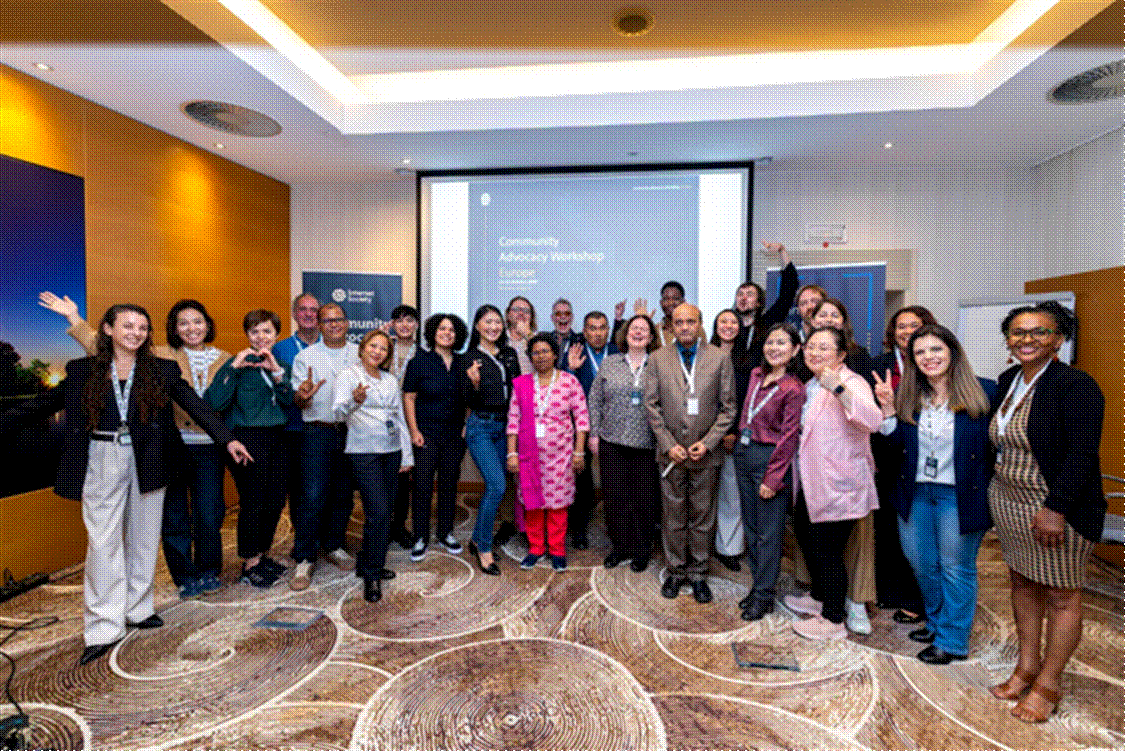
The 2026 Community Advocacy Fellows in Brussels. Photo: Internet Society.
From 13 to 15 October 2026, I joined fellows from across the Internet Society community in Brussels for the Community Advocacy Workshop Europe. I was there as a 2026 Community Advocacy Fellow, representing the Internet Society UK Chapter.
Three days in the city where much of Europe’s digital policy is written left me with sharper tools, new allies and a clearer sense of how a chapter like ours can shape decisions. Here is what I took away, and what I hope to bring home to the UK.
A room full of advocates
The fellowship brings together people who care about an open, globally connected, secure and trustworthy Internet, and helps them turn that care into effective advocacy. Our cohort spanned technical operators, researchers, civil society organisers and chapter leaders. That mix made every conversation richer.
The workshop was built around the Internet Society’s FAST model of advocacy:
- Flag threats and opportunities early.
- Analyse what a proposal would actually do to the Internet, not just what it intends.
- Build a Strategy around who decides and who influences them.
- Work Together with the community to amplify impact.
Carl Gahnberg and Callum Voge brought the model to life with the case of the EU’s proposed “Chat Control” regulation. Sustained advocacy by the Internet Society, its partners and civil society helped stop mandatory scanning of private, encrypted messages. It was a powerful reminder that community voices do change outcomes.
From policy trends to practical skills
Sally Wentworth, President and CEO of the Internet Society, and David Frautschy walked us through three live European files: the Digital Networks Act, the Tech Sovereignty Package and the proposed KIDS Act. Each called for a different posture. On one we defend the open Internet, on another we shape implementation constructively, and on the third we protect children without closing the Internet. The common lens was the Internet Way of Networking: does a measure preserve openness, interoperability and choice, or does it concentrate control?
Carl Gahnberg and Callum Voge then unpacked digital sovereignty. They argued it is best understood as a narrative rather than a single policy, and one that can strengthen or undermine an advocacy plan. Carl’s session on “Think global, act local” connected grassroots work to the global stage, from national Internet Governance Forums to the WSIS+20 process.
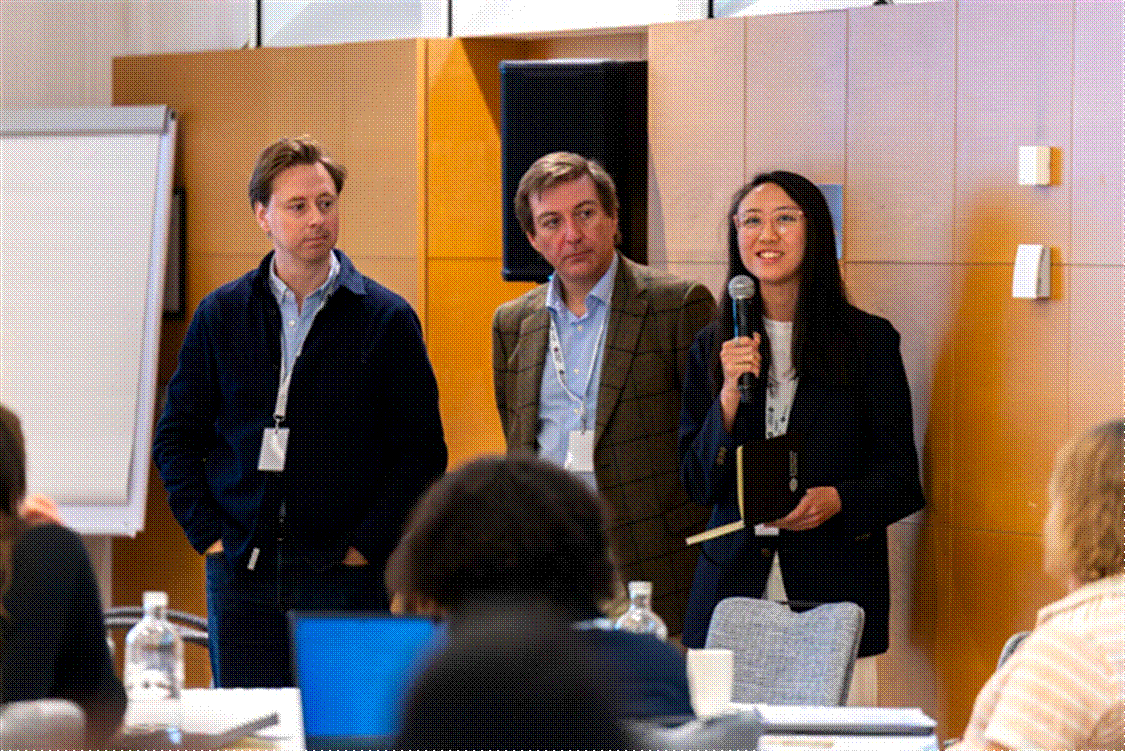
With Carl Gahnberg, Senior Director, Policy Development and Research, and David Frautschy, Senior Director, European Government and Regulatory Affairs. Photo: Internet Society.
Bringing the UK perspective
I was invited to summarise insights from our group’s discussions on children’s online safety, where the UK experience offered useful lessons for colleagues watching the EU’s KIDS Act.
Everyone in the room agreed that the concern is legitimate. Children deserve online services designed with their safety in mind. The harder question is how. Age verification measures rarely apply to minors alone: in practice, they reach every user. That raises real questions about privacy, access to information, open participation and the compliance burden on smaller services.
The UK has already begun living with these trade-offs, so we have something valuable to offer the wider European conversation. My own background is in design, and I left convinced that safety-by-design and privacy-preserving age assurance can work together. A safer Internet and an open Internet are not opposites, and our advocacy should say so with confidence.
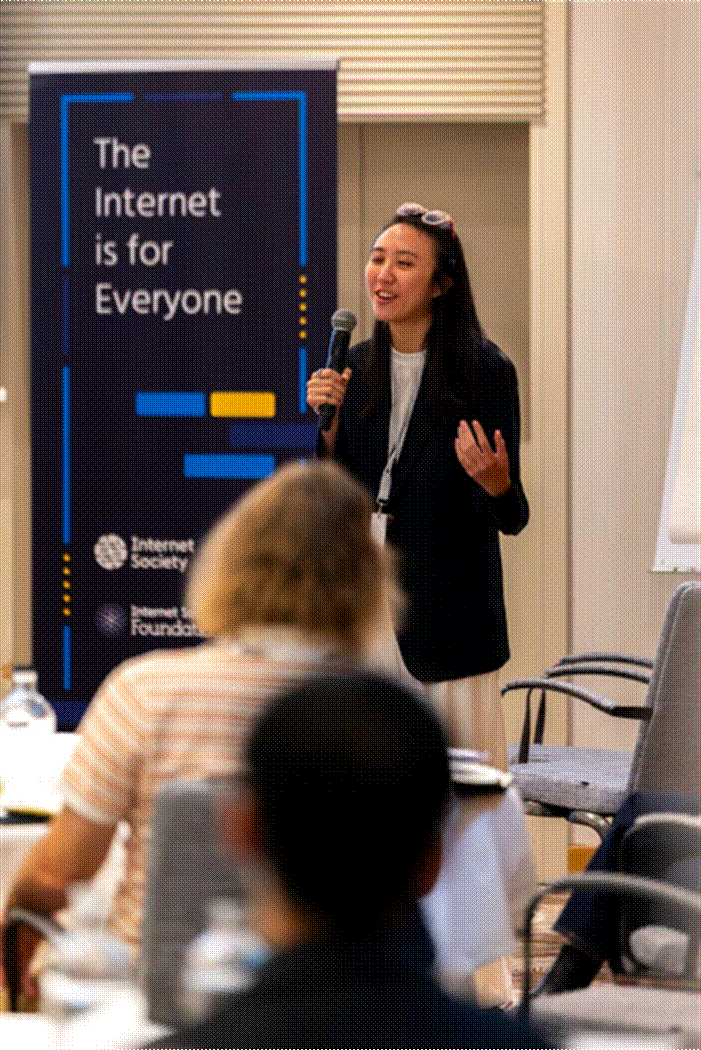
Summarising insights from the children’s online safety discussions. Photo: Internet Society.
Inside the European Parliament
A highlight of the week was a closed-door roundtable at the European Parliament. Sally Wentworth joined Members of the European Parliament, European Commission officials and Internet Society chapter representatives around one table.
Watching that conversation, the workshop’s lessons became concrete. Clear asks, credible evidence and a hopeful vision of what the Internet can be all matter when you finally have a decision-maker’s attention. It also showed how chapters, from Armenia to Kyrgyzstan, bring local knowledge that policymakers in Brussels cannot get anywhere else.
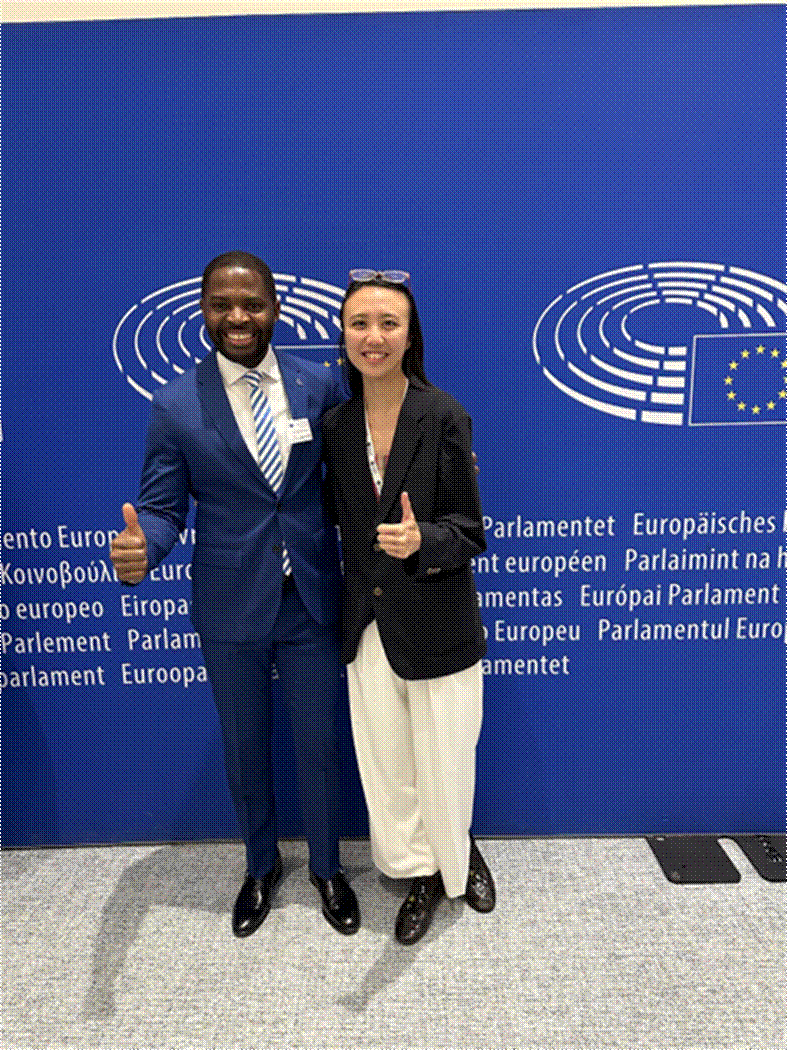
With Victor Ndonnang at the European Parliament. Photo: Internet Society.
What comes next for the UK Chapter
I came home with a working advocacy plan.
The UK’s best researchers agree that children face real risks online. But the evidence shows those risks come from design, not mere access, and that they fall at specific ages rather than at a blanket age of 16. I am proposing that we gather at IGF 2026 with an exhibition of excellent UK research and artwork. The aim is to inform and inspire both the public and legislators, and to bring more nuance and care to how we tackle the problem.
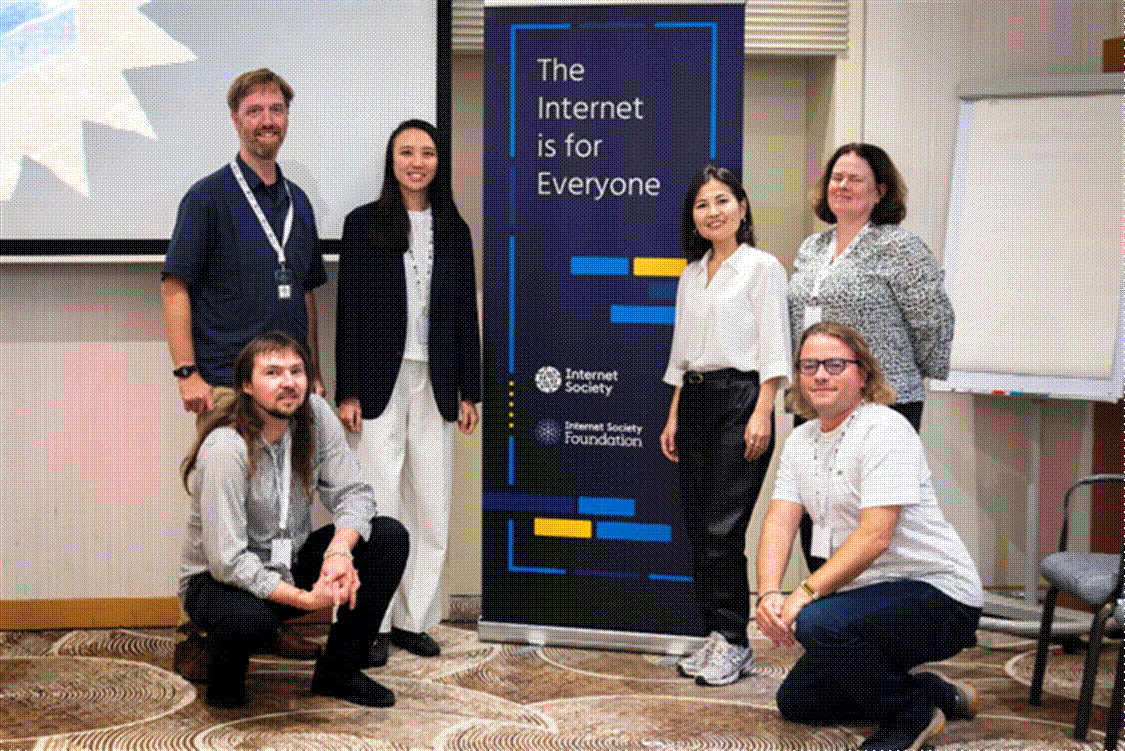
With Internet Society UK Chapter members, including Rex Wickham (far left), and new friends. Photo: Internet Society.
I look forward to developing it with fellow UK Chapter members in the months ahead. The Internet is for everyone, and so is the work of protecting it.
My thanks to the Internet Society team for an extraordinary programme, and to my fellow advocates for their generosity and ideas. Special thanks to Joyce Dogniez, Vice President, Empowerment and Outreach at the Internet Society Foundation, for pointing me to the UK IGF as an immediate venue; to Callum Voge for advocacy support; to Al Ghaff for communications and media training; to David Frautschy for policy training; and to Victor Ndonnang and Jane Ruffino for cheerleading.
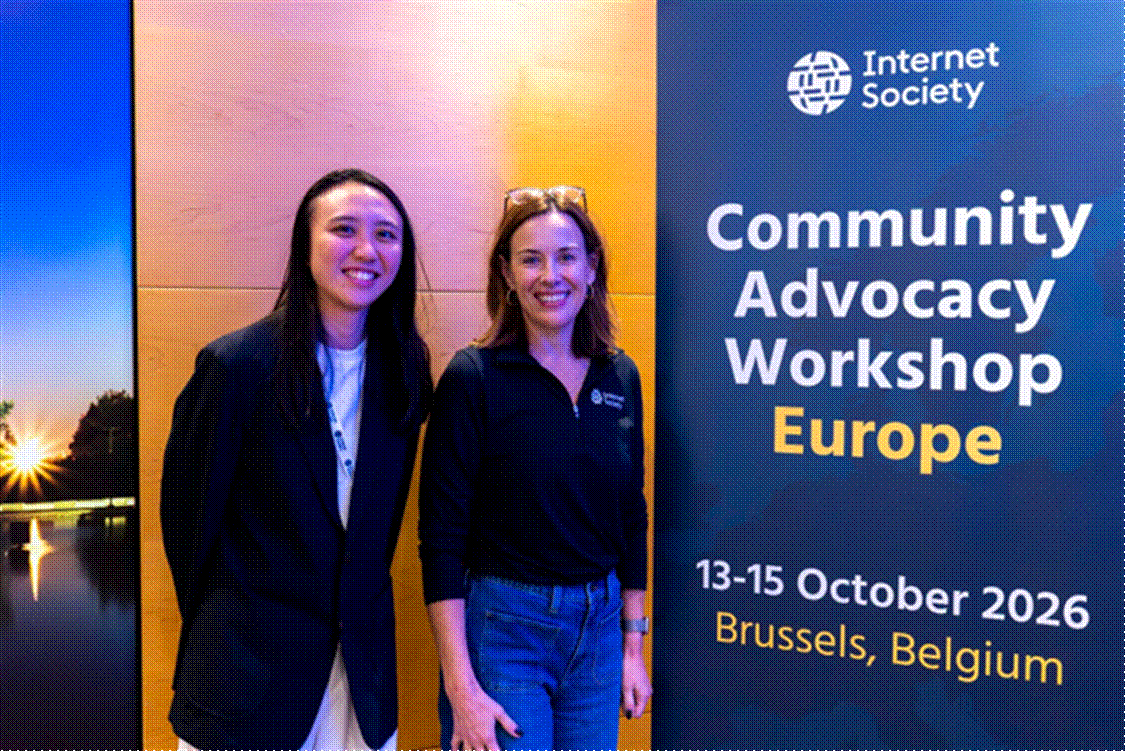
With Sally Wentworth, President and CEO of the Internet Society. Photo: Internet Society.
Valerie Chua Yan Tong is a 2026 Internet Society Community Advocacy Fellow representing the Internet Society UK Chapter. She is a postgraduate scholar in design engineering at Imperial College London and the Royal College of Art. All photos courtesy of the Internet Society.